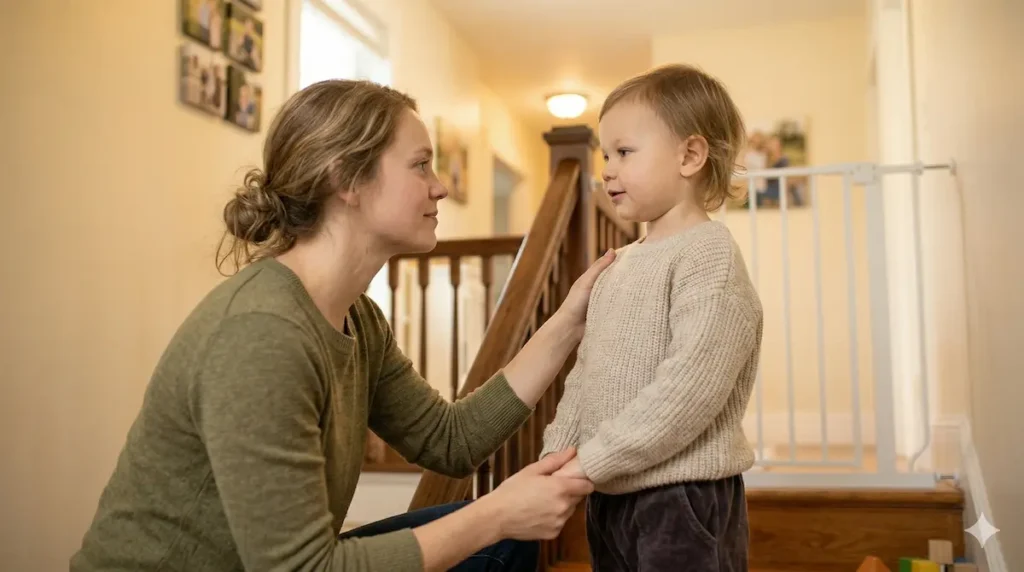
Then there’s what actually happens: you notice your ten-month-old is suddenly fast, you remember you haven’t touched the cleaning supplies cabinet since before she was born, and you spend the next forty minutes in a panic-driven scramble through your own house.
Both versions count. Child-proofing your home doesn’t have to be perfect — it has to be done. And this guide is written for the mom who is realistic about her time, her budget, and the fact that her toddler has already outwitted her twice this week.
Let’s go room by room.
Christie’s take: I did my first real child-proofing sweep at 10 months — which felt late and probably was. This guide is everything I wish someone had handed me in a prioritized list instead of a 47-tab Pinterest board.
In this article
The Kitchen: Highest Risk, Highest Priority
The kitchen is where most childhood household accidents happen, which means it’s where to start your child proofing checklist — and where to spend the most time.
What actually matters:
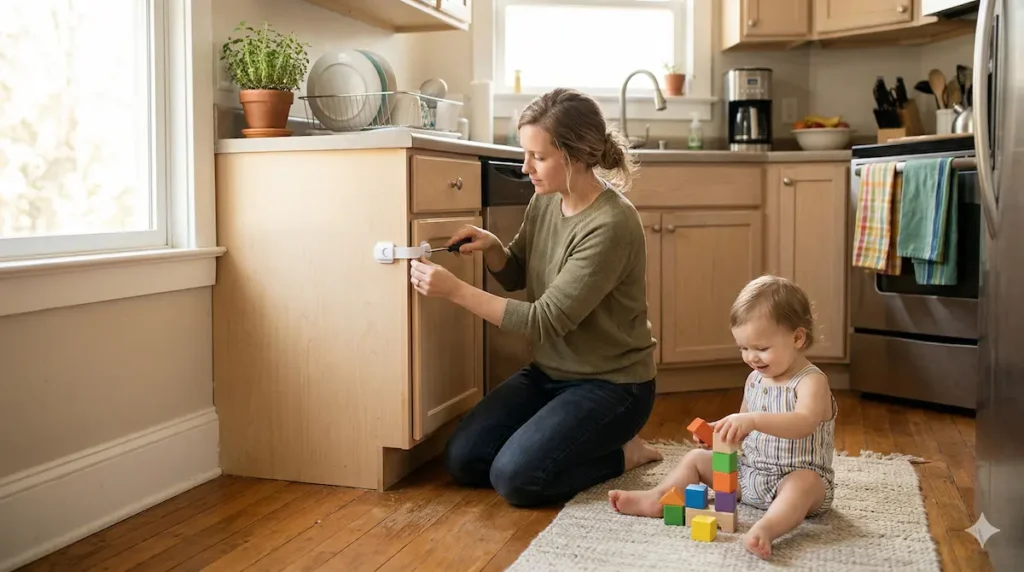
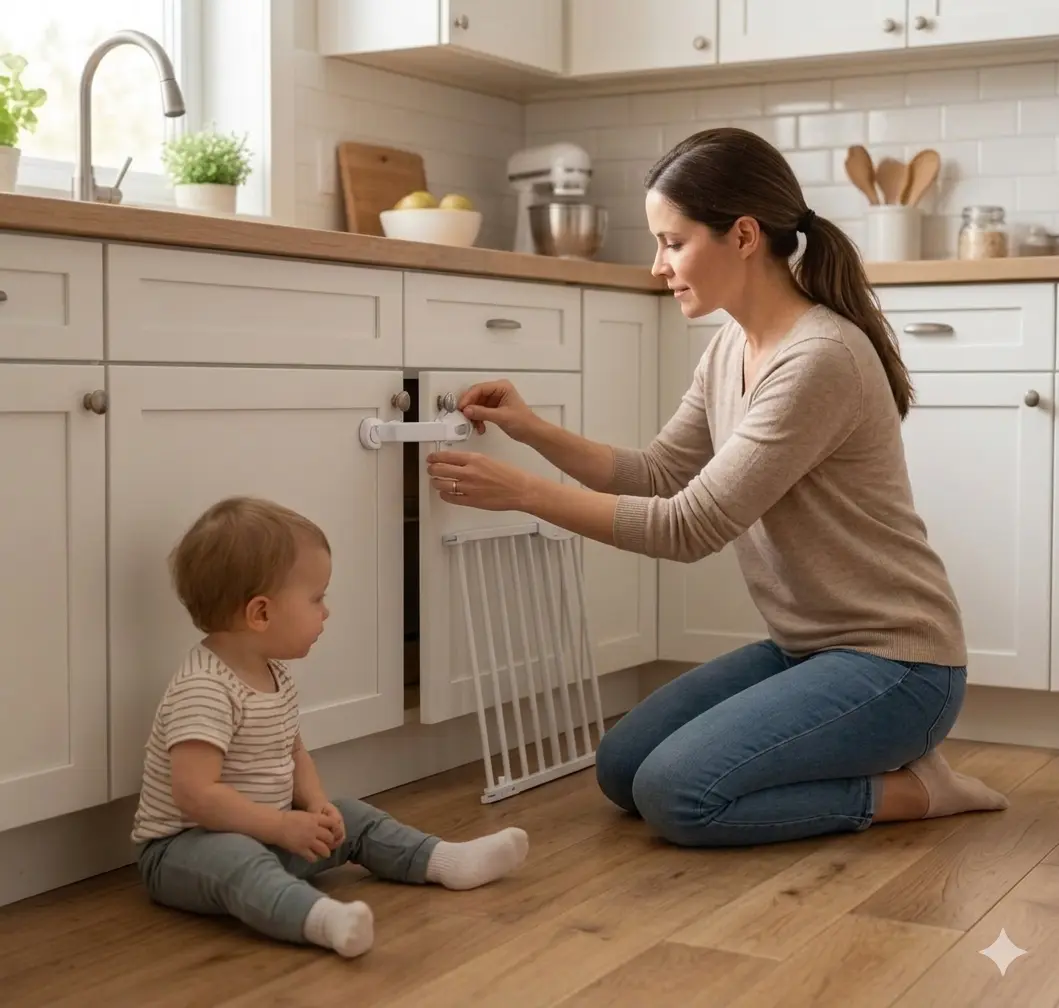
- Cabinet locks on anything hazardous. Cleaning products, sharp utensils, heavy pots. You don’t need to lock every cabinet — focus on the dangerous ones. Magnetic locks are the most tamper-resistant; adhesive latches work for lighter use.
- Stove knob covers. A toddler can turn a gas knob. Stove knob covers are inexpensive and take five minutes to install. Do this one today.
- Oven door lock. If your oven door gets hot on the outside (most do), an oven lock prevents little hands from pulling it open.
- Refrigerator lock. Optional unless your child has figured out how to open yours. Some toddlers do this early, especially the ones who seem to be training for something.
- Move the sharp stuff up. Knives, skewers, graters — anything that can cut goes on a high shelf or in a locked drawer.
Skip: Locking every single cabinet. Pick your battles. A cabinet with tupperware is a toddler’s best entertainment. Let them have it.
The Living Room: Furniture Is the Main Threat
The living room feels safer than the kitchen, but it’s where most of the heavy falling happens. Furniture tip-overs kill children every year — mostly bookshelves and dressers that weren’t anchored.
What actually matters:
- Anchor tall furniture to the wall. Bookshelves, entertainment units, dressers — any piece that could tip if a child climbed it. Wall anchor straps are cheap and available at any hardware store. This is a non-negotiable if you have a climber.
- Outlet covers. Standard plug covers are fine for very young babies. Once your child can pull them out (usually around 2), upgrade to sliding outlet covers that require a two-step motion to open.
- Corner guards on coffee tables. Foam corner guards look terrible. Put them on anyway. You can take them off when your kid’s older and keep your table.
- Remove or secure the TV. A flat-screen TV on a stand that isn’t anchored is a falling hazard. Mount it to the wall or anchor the stand.
- Fireplace gates. If you have a fireplace — even a decorative one — a hearth gate is worth it. Hearth edges are the right height for a toddler to fall face-first into.
The Bathroom: Lock It When Not in Use
The simplest child proofing rule for the bathroom is this: keep the door closed. A door handle cover that adults can open but children can’t is a $5 fix that handles most of the risk.
What actually matters:
- Toilet lock. Toddlers drown in toilets. It sounds unlikely until it happens. A toilet lock is inexpensive and installs in seconds.
- Non-slip mat in the tub. For every age — not just toddlers. Wet tub surfaces are slippery for everyone.
- Medications locked up or out of reach. The medicine cabinet at adult eye-level isn’t good enough for a child who can climb. Use a locked box or a high shelf they can’t reach even on a stool. This includes vitamins — gummy vitamins are especially dangerous because they look like candy.
- Hot water heater set to 120°F or below. Check your water heater setting. At 140°F, it takes five seconds to cause a serious burn. At 120°F, it takes five minutes. This one setting change protects your child every single bath.
- Hair dryer and other appliances unplugged and stored. Any appliance near water — unplugged when not in use, stored away from the tub or sink.
Bedrooms: Your Child’s Room First
Apply the same furniture anchoring rules to your child’s bedroom — dressers are the number-one tip-over hazard in bedrooms. Kids climb them to reach things on top.
What actually matters:
- Anchor the dresser and bookshelf. Every time. No exceptions.
- Crib safety (for babies). Nothing in the crib except a firm mattress and fitted sheet until 12 months. No bumpers, pillows, stuffed animals, or sleep positioners — all suffocation risks.
- Window guards or stops. Windows on upper floors need a stop that prevents them from opening more than four inches, or a guard with an emergency release. Children fall out of windows more often than most parents realize.
- Blind cord safety. Looped blind cords are a strangulation hazard. Use cord wind-ups or replace with cordless blinds in children’s rooms.
Stairs, Hallways, and the Garage
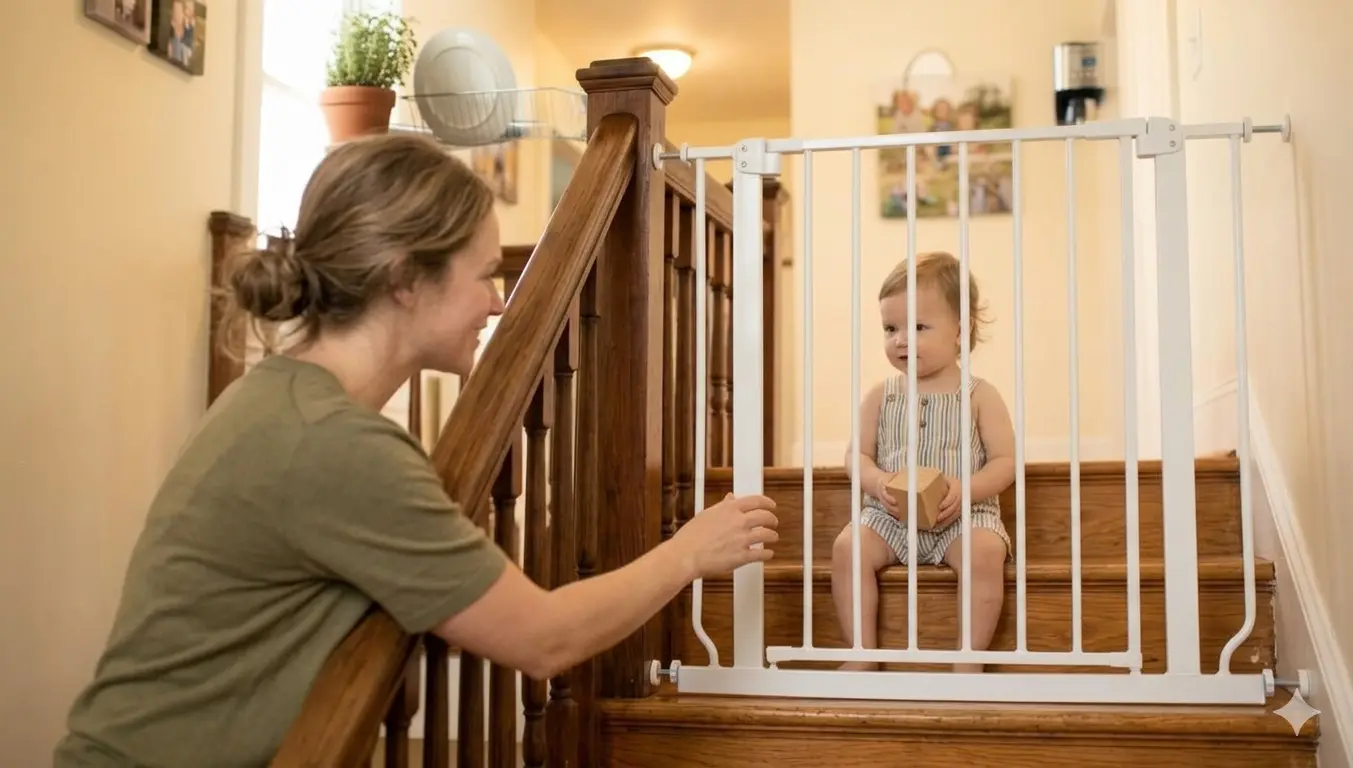
If you have stairs, you need a gate at the top and ideally one at the bottom. Top-of-stairs gates should be hardware-mounted (screwed into the wall or banister), not pressure-mounted. Pressure-mounted gates are for doorways — they can pop out under a child’s weight at the top of stairs.
The garage is the most overlooked hazard zone in most homes. It’s where chemicals live, where power tools live, where the car lives. Keep it locked when you’re not actively in it. Store chemicals on high shelves in original containers. Carbon monoxide detectors are essential if your garage is attached to your home.
The Child-Proofing Checklist: Start Here
If you’re doing this all at once and feel overwhelmed, use this prioritized order:
- Lock cabinets with hazardous contents (cleaning products, knives, medications)
- Anchor tall furniture in every room
- Install stove knob covers
- Add bathroom door handle cover + toilet lock
- Set water heater to 120°F
- Install outlet covers (upgrade to sliding type once child is 18+ months)
- Check window guards on upper floors
- Install stair gates (hardware-mounted at top)
- Remove looped blind cords from children’s rooms
- Secure or mount TV
You don’t have to do all of this in one afternoon. Start with items 1–4 today. That covers the highest-probability hazards. Then work through the rest over the next week.
Free Download
Grab the Busy Mom’s Weekly Reset Checklist — a simple system for reclaiming your week without losing your mind.
A Bigger Picture Thought
Child-proofing your home is really about one thing: removing the variables that are within your control so you can stop worrying about them. A house that’s been thought through — even imperfectly — lets you be a more present mom, because you’re not running threat assessments every time your kid moves.
That same thinking applies beyond cabinet locks. The moms who worry least about their family’s future are the ones who’ve taken care of the basics: the emergency fund, the health coverage, the skills that generate income even when life gets unpredictable. A child-proofed house is the physical version of that. A child-proofed life is the goal.
Start where you are. Do what you can. The rest can wait — but the stove knob covers really can’t.
Looking for more practical family safety and home tips? Browse the Busy Mom Diary for honest, real-life guides written for moms who don’t have time to waste.
Which room did you tackle first? Or which one are you putting off? Drop it in the comments — no judgment here. 👇
You Might Also Like
Parenting
The 4 Parenting Styles Explained (And What Most Moms Actually Are)
Mom Life
4 Things Every Mom Should Do Instead of Cleaning
Disclosure: This post may contain affiliate links. If you purchase through one of my links, I may earn a small commission at no extra cost to you. I only recommend things I genuinely use or believe in. Read my full disclaimer here.

About Christie
Christie is a busy mom based in New York writing about real life — quick meals, smart buys, and the honest truth about keeping it together when you’re pulled in twelve directions at once. No Pinterest perfection here, just practical strategies that actually work.
Frequently Asked Questions
What age should you start child-proofing your home?
Start before your baby is mobile — ideally around 4 to 6 months, before crawling begins. Once a baby can move, the window to get ahead of hazards closes fast. If you’re behind, don’t panic: start with the kitchen and bathroom today, then work through the rest of the house over the following week.
What’s the most important thing to child-proof first?
The kitchen comes first — it has the highest concentration of hazards: cleaning products, sharp objects, hot surfaces, and heavy items. Lock hazardous cabinets and install stove knob covers before anything else. After that, tall furniture anchoring across the whole house is the next highest-priority task.
Do I really need to anchor furniture to the wall?
Yes — furniture tip-overs are one of the leading causes of child injury deaths at home. Bookshelves and dressers look stable until a toddler climbs a drawer like a ladder. Wall anchor straps cost a few dollars at any hardware store and take about ten minutes to install. It’s one of the highest-impact, lowest-effort things on the entire baby proofing checklist.
What’s the difference between pressure-mounted and hardware-mounted baby gates?
Pressure-mounted gates use tension to stay in place — they’re fine for doorways but should never be used at the top of stairs because a child’s weight can knock them loose. Hardware-mounted gates are screwed directly into the wall or banister and are the only safe option at the top of a staircase.
How do I child-proof on a tight budget?
Prioritize the free and cheap fixes first: set your water heater to 120°F (free), move hazardous items to high shelves (free), keep the bathroom door closed (free). Then spend on the highest-impact purchases: cabinet locks, outlet covers, and furniture anchor straps. You can child-proof the most critical hazards in your home for under $50.